Pangolin – Designing for Rural Health Equity
A social prescribing tool for Somerset Village Agent link workers – reducing fragmentation in the referral and client management system.
The problem
[ Who are Village Agent link workers? What does their day look like? Context: rural Somerset, NHS-adjacent social prescribing, voluntary sector. The role sits in a gap – not quite health, not quite social work – navigating a patchwork of referral sources, community services, and client needs. ]
"We're just really willy-nilly recording stuff." – Link worker, 6 years experience
[ Describe the fragmentation problem: multiple systems, no single source of truth, paper records alongside digital, referral tracking done informally. The problem isn't a lack of effort – it's a lack of infrastructure suited to how this work actually happens. ]
The fragmented landscape link workers navigate daily.
Research & discovery
[ Why these methods? Rationale for semi-structured interviews with link workers. Ethics process – why it mattered for a health-adjacent participant group. The decision to lead with interviews rather than surveys reflects the exploratory nature of the problem: we needed to understand behaviour before we could measure it. ]
4 semi-structured interviews with Somerset Village Agent link workers. Participants: varied tenure (2–10 years), rural and peri-urban areas.
18 responses. [ Key quantitative findings – what did the survey reveal that the interviews couldn't? ]
Key themes emerging from interview coding.
Composite persona derived from interview participants.
Key insights
[ Main finding – describe the behaviour or pain point, then what it means for design. Frame it as an insight, not just a complaint: what does this tell us about what the system needs to do? ]
[ Second finding ]
[ Third finding ]
Design process
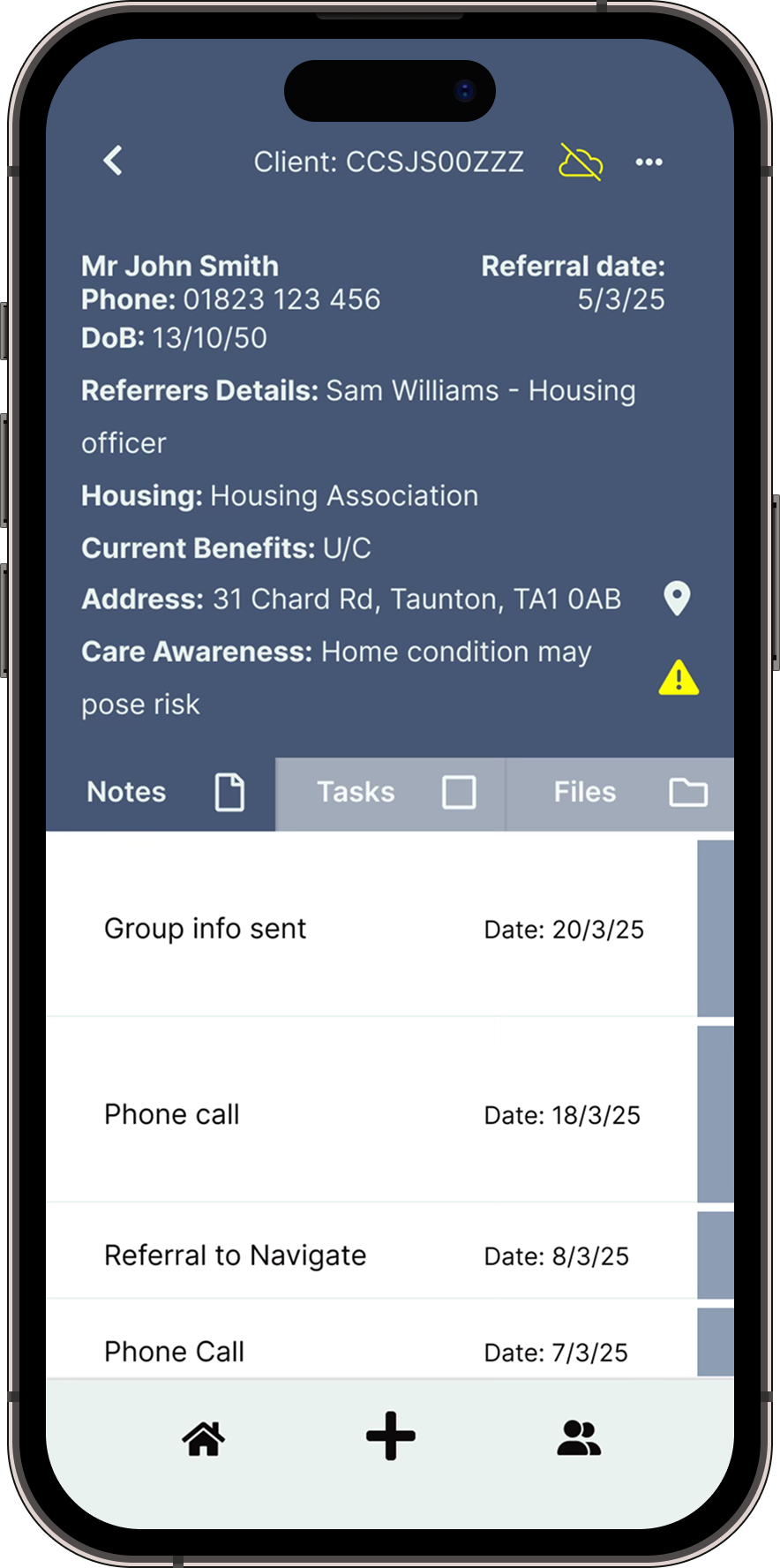
[ How did the research translate into design decisions? What was considered and ruled out, and why? The translation from insight to design is where the thinking becomes visible – this section should show the decision-making, not just the output. ]
[ What did early ideation look like? What was rejected and why? ]
[ What changed between iterations and what drove those decisions? ]
Play button – not autoplay
Note: embedded Figma prototypes may not be fully keyboard-accessible. A narrated video walkthrough is provided as an equivalent.
Outcome
[ What did the project produce? What was the result of the design work? Even if no product shipped – what did the research and design reveal? What would the next stage look like? Frame the outcome honestly: a research-led prototype at this stage is a legitimate and valuable output. ]
[ Describe the final prototype, research output, or handoff artefact. Be specific: screens, flows, documentation, or recommendations. ]
Reflection
[ What worked well? What would you do differently with more time or resource? What did you personally learn – about the domain, the method, your practice? This is professional maturity, not apology. The best reflections show that you can think critically about your own process. ]
[ 2–3 honest observations ]
[ 2–3 honest observations – this is professional maturity, not apology ]